
The EmberHalt system
Sense. Model.
Deploy intelligently.
EmberHalt uses advanced, real-time fire modeling to guide water deployment. Local sensors and public data connect the conditions around a property to the decision to act.
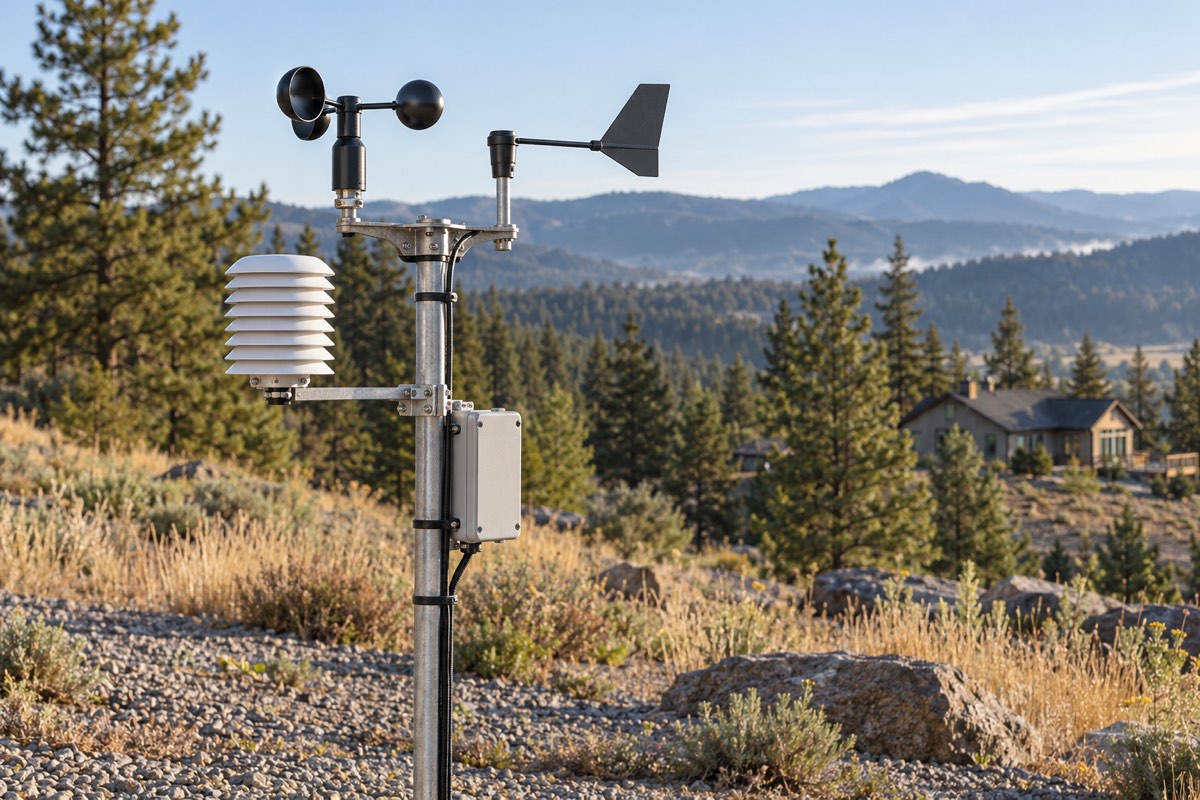
01 / Sense
Start with conditions on the ground.
We draw on local measurements such as humidity, ground moisture, and wind speed, alongside public weather and fire information. Local sensing brings site conditions into a broader picture of the threat.
Sensor selection and placement depend on the property. The goal is useful information for deployment decisions, rather than data collection for its own sake.
02 / Model
Let changing conditions guide timing.
Our real-time fire modeling combines local and public inputs to inform when water deployment makes the most sense. As conditions change, the model gives the controls an updated basis for action.
This is the core of EmberHalt: connecting the decision to deploy water to the developing situation. We focus on using available water intelligently, rather than treating water delivery as the entire solution.
03 / Deploy
Put available water to work.
Water storage or an available supply feeds pumps and exterior sprinklers. The control system connects model-informed timing to water deployment around the property.
Water volume, flow, pressure, coverage, and runtime set the practical boundaries. We design around those limits and evaluate how the complete system performs.
Connected hardware
The equipment behind the decision.
Sensors and modeling inform the controls. Storage, pumps, and sprinklers carry out the water delivery. Each part supports the same goal: deploy water at the most useful time.
This schematic explains the system’s components. Actual equipment and layout vary by property.
04 / Validate
A working prototype. Continued testing.
Our prototype works. We continue to evaluate integrated performance, including water delivery, sensing, controls, power, and connectivity.
We tie performance claims to measured results. Intelligent timing is our focus; it is not a promise of perfect prediction or guaranteed protection.
See where we are launching.
Launch & development ↗Timing in practice
A decision that changes with conditions.
Illustrative scenario: a property has a finite water supply. The system assesses local humidity, soil moisture, and wind alongside public weather and fire information. As the model updates, it informs whether conditions warrant deployment and when to use the available water.
This explains the decision process, not a measured forecast or a published activation threshold. Equipment limits and site conditions still bound operation.
When comparing options, ask what triggers watering, what local information affects that decision, and how the system accounts for limited water.
Built around your property
From site assessment to ongoing care.
Intelligent timing and practical property design work together. Water availability, terrain, power, and connectivity shape the system we plan for your site.
01 / Assessment & design
Design around the site.
We assess terrain, vegetation, exterior exposure, water availability, power, connectivity, and access. These conditions shape equipment selection and the information we need to make deployment decisions.
- Identify exterior areas for water delivery.
- Assess water storage, supply, and operating constraints.
- Plan sensor placement around the property’s conditions.
Our focus extends beyond where the sprinklers go: we consider how the system will decide when to use them.
02 / Installation & commissioning
Connect the equipment to the intelligence.
Our launch approach brings water delivery, sensors, and controls into a coordinated installation. We check water coverage and controls, review local measurements, and establish operating limits for the property.
We plan owner orientation and commissioning around practical questions: how to check system status, how to use manual controls, and what to expect when power or connectivity changes.
Explore the system →03 / Monitoring & maintenance
Keep the system ready.
We build ongoing care into the service plan. Monitoring supports visibility; seasonal checks and maintenance keep attention on the physical equipment and sensors behind every deployment decision.
- Plan seasonal startup and winterization for the site.
- Check pumps, filters, piping, sprinklers, and sensors.
- Review system status, controls, and maintenance needs.
We will define service schedules and response arrangements with the launch offering.
Start with your property
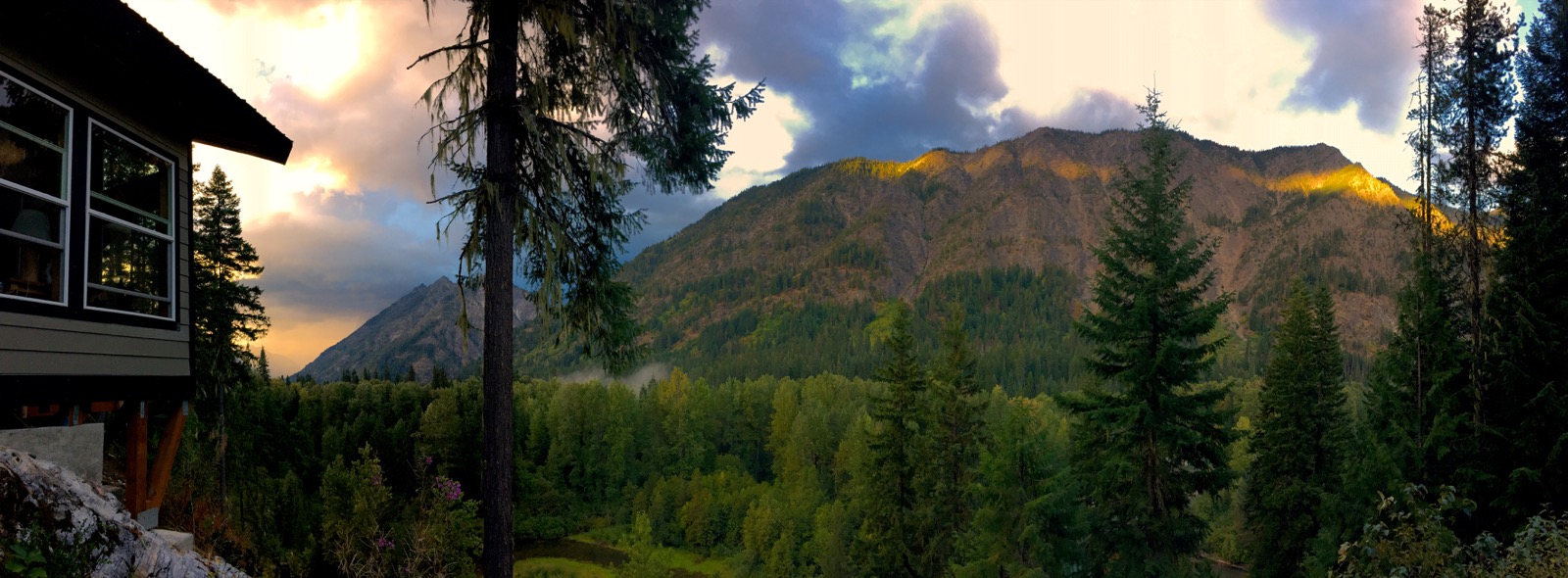
Tell us what matters to you.
Our 10-minute questionnaire helps us understand your property, wildfire concerns, and what you need from a protection system. It is an initial conversation, not an order or a site assessment.
Take the questionnaire ↗